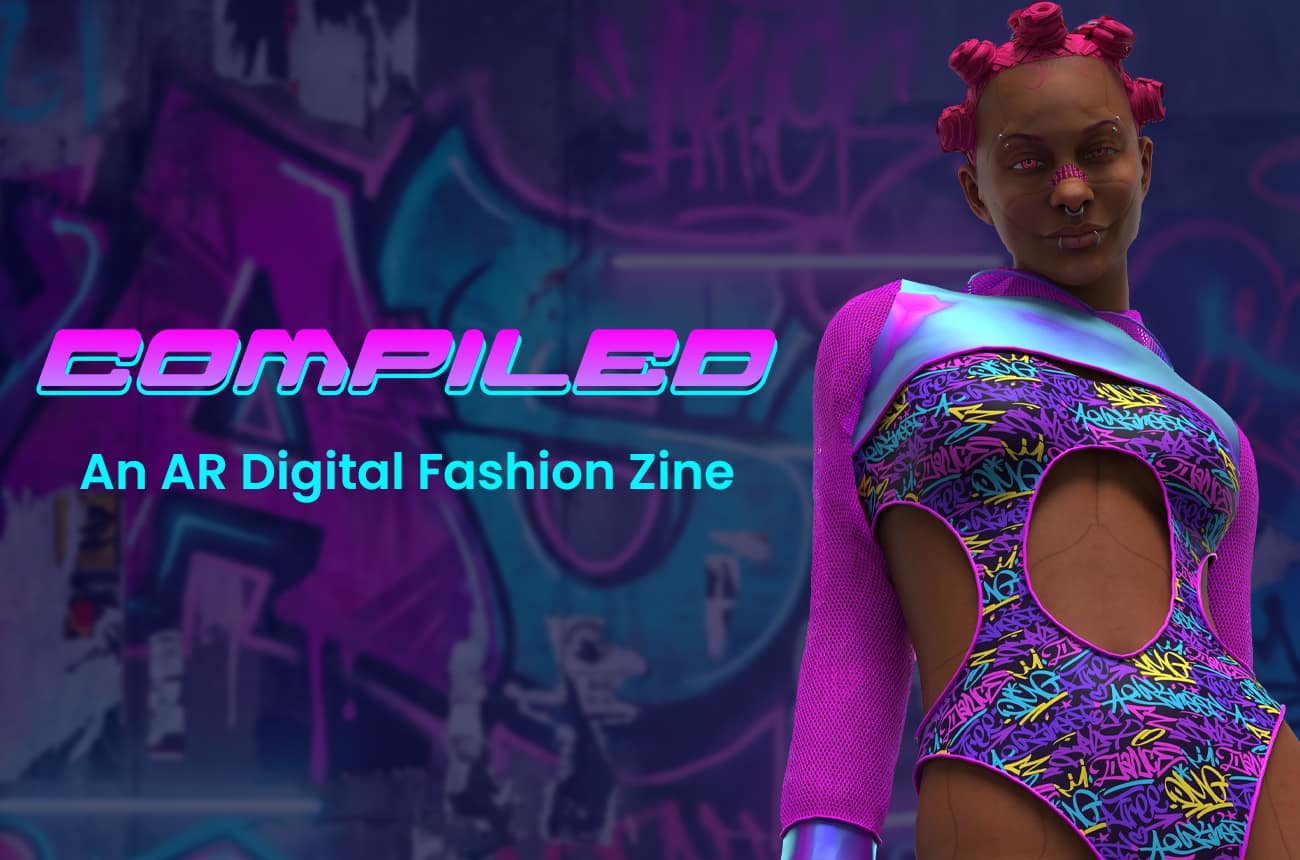
Created as an introduction to my work as a New Media Artist, Compiled explores how physical and digital media can coexist within a single experience. Visitors scan the zine with their phone to reveal AR content and digital fashion throughout the zine.
Compiled: An AR Zine Exploring Digital Fashion + Identity
Project Details
| Categories | SMC |
|---|---|
| My Role | Graphic Designer, Digital Fashion Designer, Art Director, Motion Designer |
| Project Timeline | 13 weeks - SMC Spring 2026 |
| Project Type | Academic |
Context
Project Brief
Transitioning to a New Media Art practice, I wanted to create a project that reflected my next chapter. A zine was chosen as the primary format because it provided a tangible way to showcase my niches as a new media artist: graphic design, motion design, digital fashion, and technology within a single experience.
The Challenge
The challenge was finding a way to bring together multiple disciplines into a cohesive experience while keeping the work accessible to a general audience. The final solution needed to balance physical and digital interactions without allowing either to overshadow the other.
Experiment #1 – Web AR Test
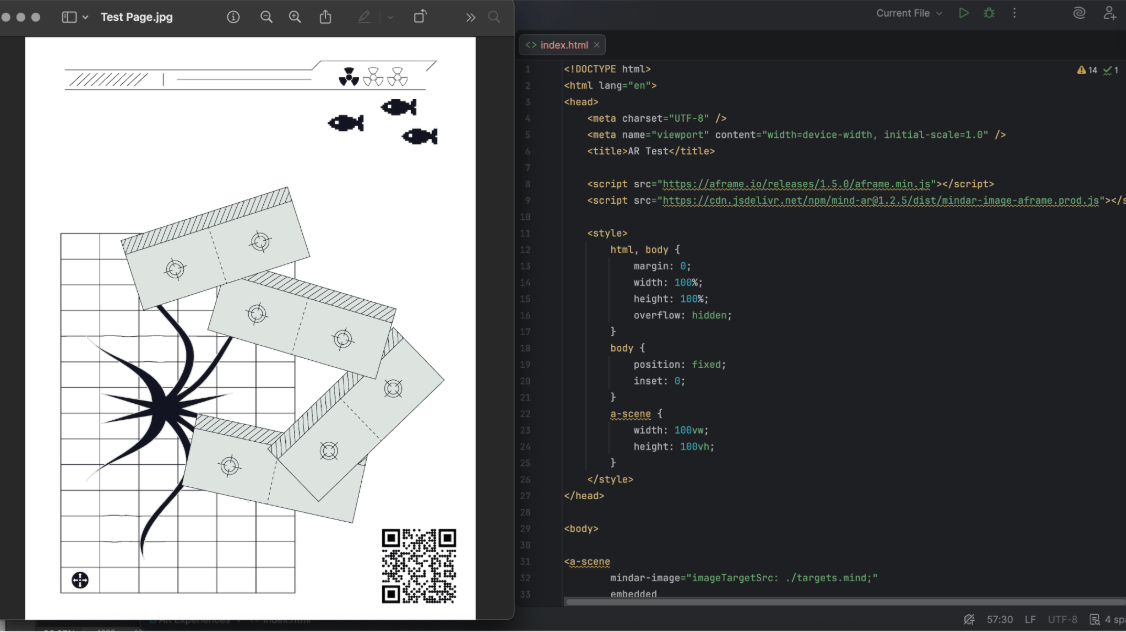
The first experiment focused on testing browser-based WebAR using MindAR. Through testing, I found that transparent PNG sequences provided better visual integration but created performance issues, while video overlays were more stable but lacked transparency. Based on these findings, I moved away from a custom MindAR and used Kivicube for the final prototype.
Experiment #2 – Zine Construction
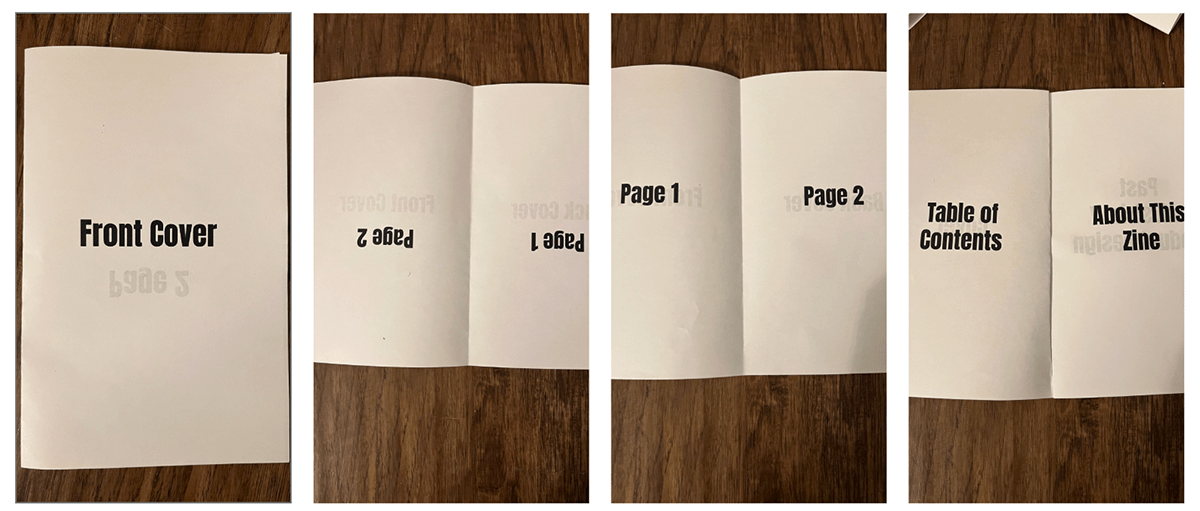
The second experiment focused on testing the physical construction of the zine using Adobe InDesign. Through test prints, I evaluated page ordering, booklet setup, folding, and print settings to better understand how the digital layout translated into a printed format. These findings helped establish the production workflow used for the final zine.
Experiment #3 – Character Development (Pixie)
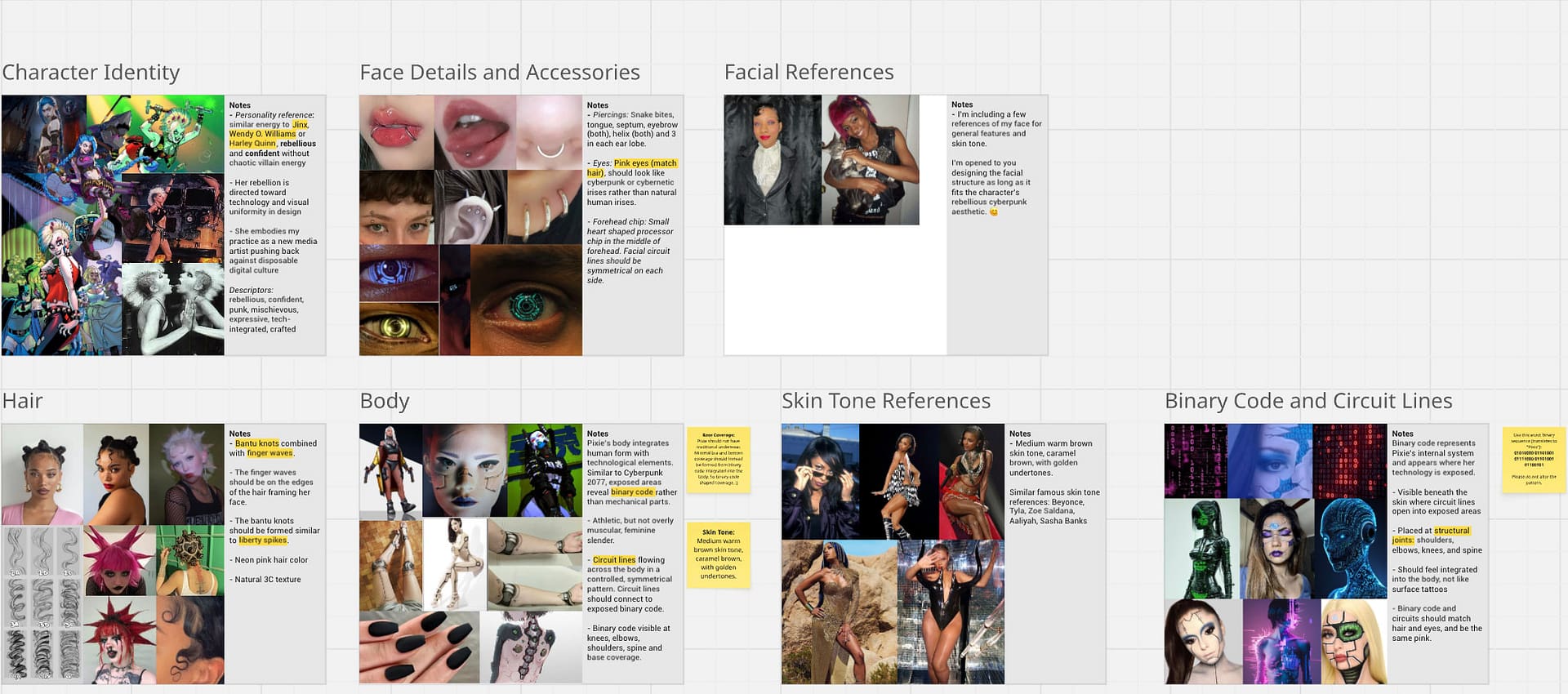
The third experiment focused on developing Pixie, a character created to represent my artistic practice. Working with a 2D artist, I created a detailed character brief that defined her appearance, personality, and visual identity. This experiment laid the foundation for a 3D character who would appear throughout the zine and showcase my digital fashion designs.
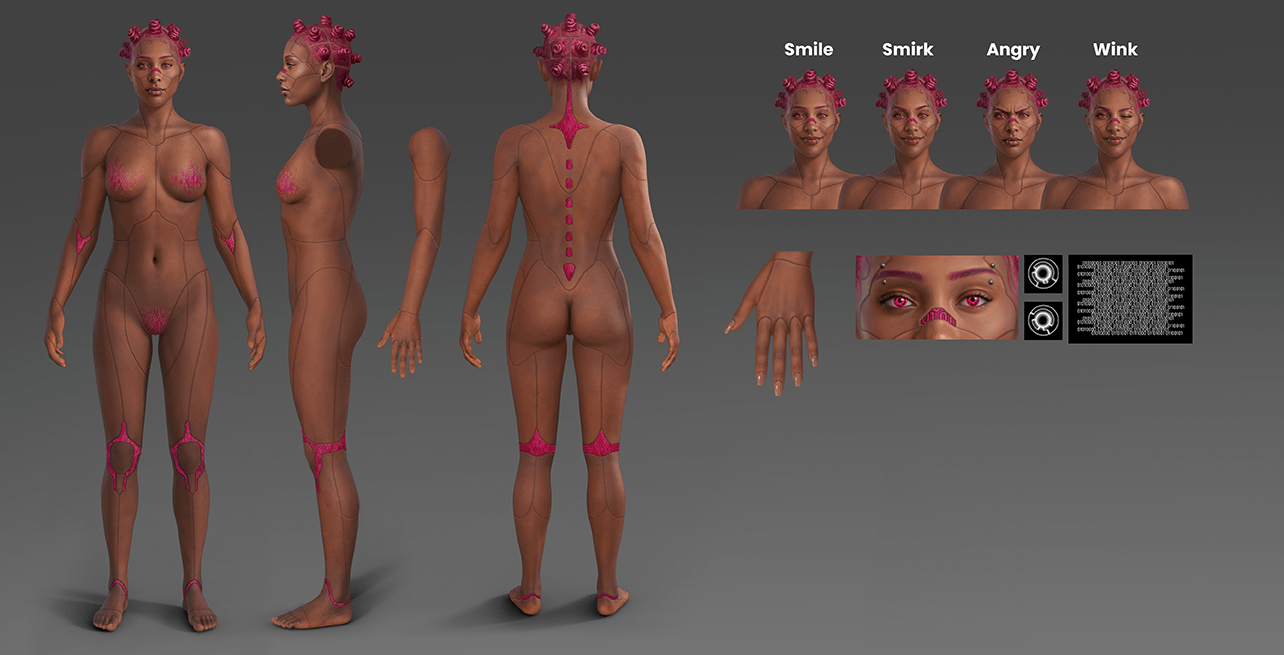
3D Character Development – Round 1
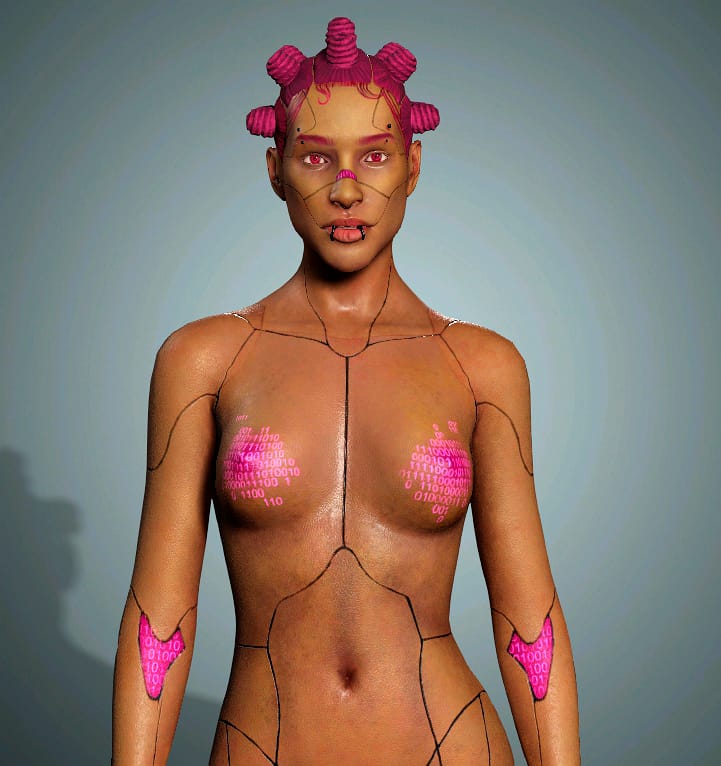
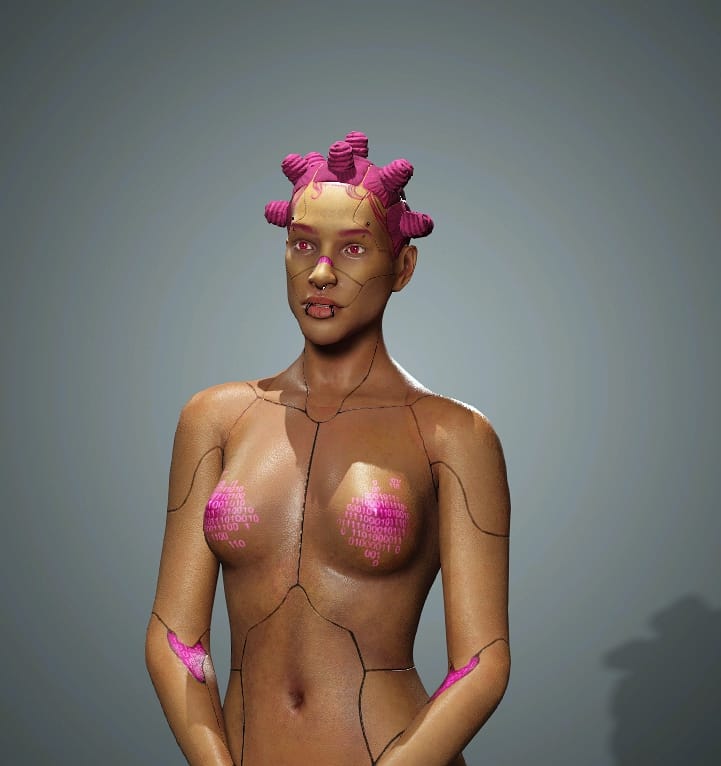
After completing Pixie’s character reference sheet, I hired a 3D artist to translate the design into a 3D character. While the initial model incorporated many of the reference sheet’s core features, the final result did not fully align with the character’s intended appearance and visual direction. This led to additional revisions and ultimately the decision to continue development with a new artist.
Reasons for switching artists:
- Facial features did not closely match the approved reference sheet.
- Hair shape and overall silhouette differed from the intended design.
- Cybernetic details lacked the precision shown in the concept artwork.
- Binary code elements were inconsistent with the reference sheet.
- Eye design did not match the intended cybernetic eye references.
- Several visual details were simplified or interpreted differently from the original brief.
- The overall character did not fully capture Pixie’s intended personality and aesthetic.
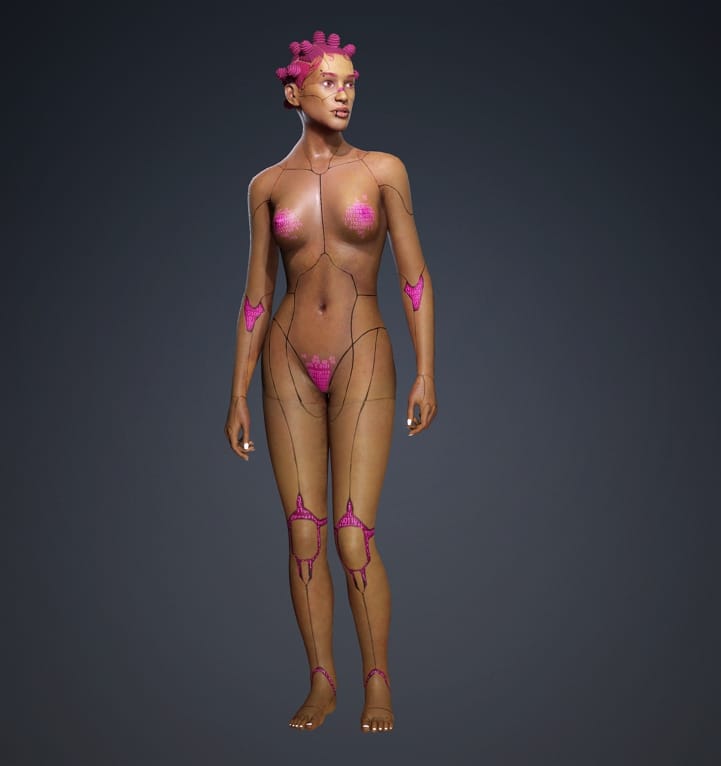
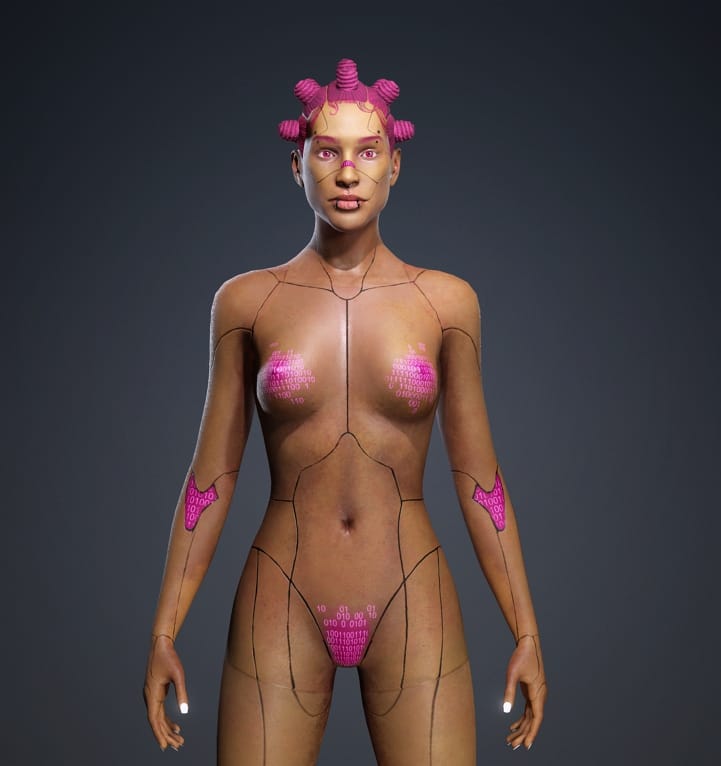
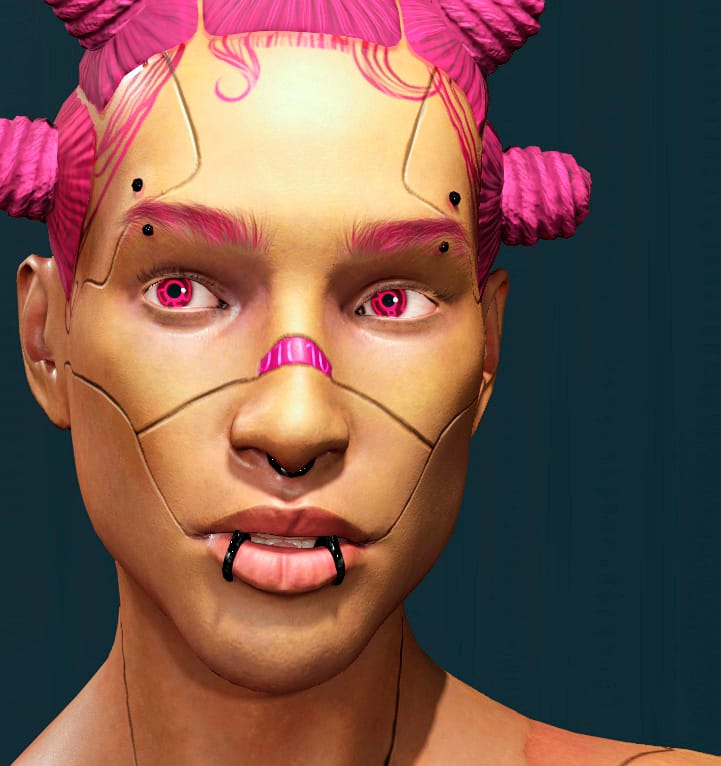
3D Character Development – Round 2: Final 3D Model
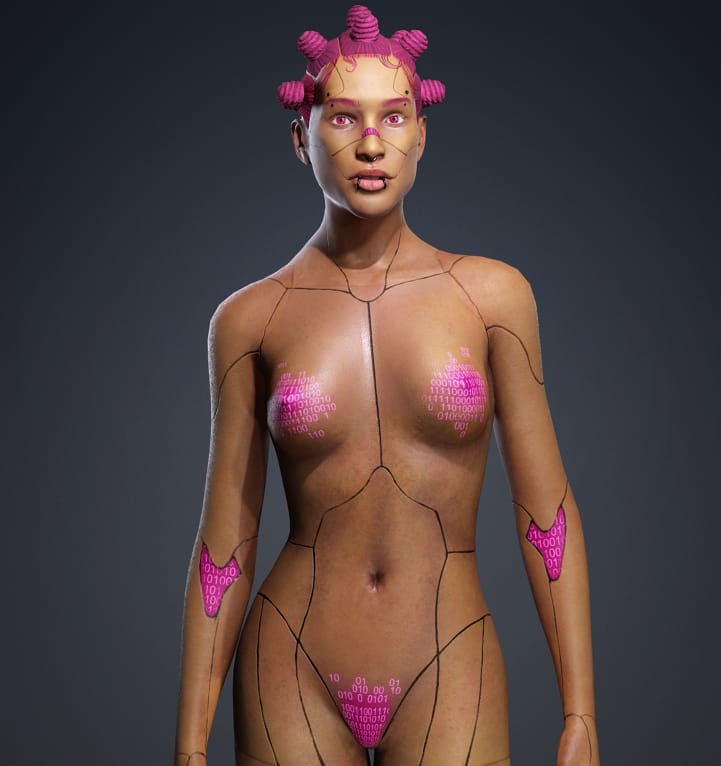
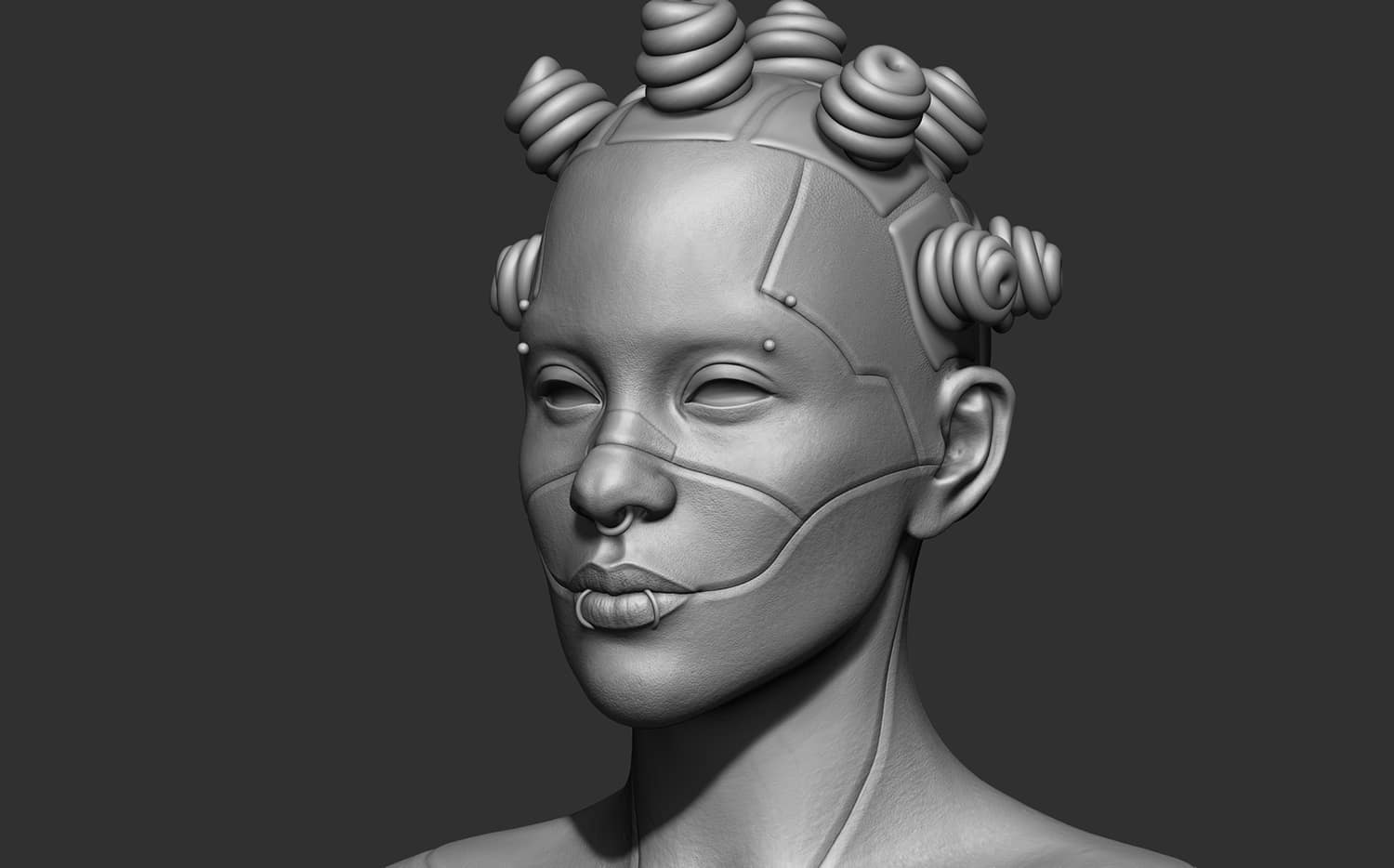
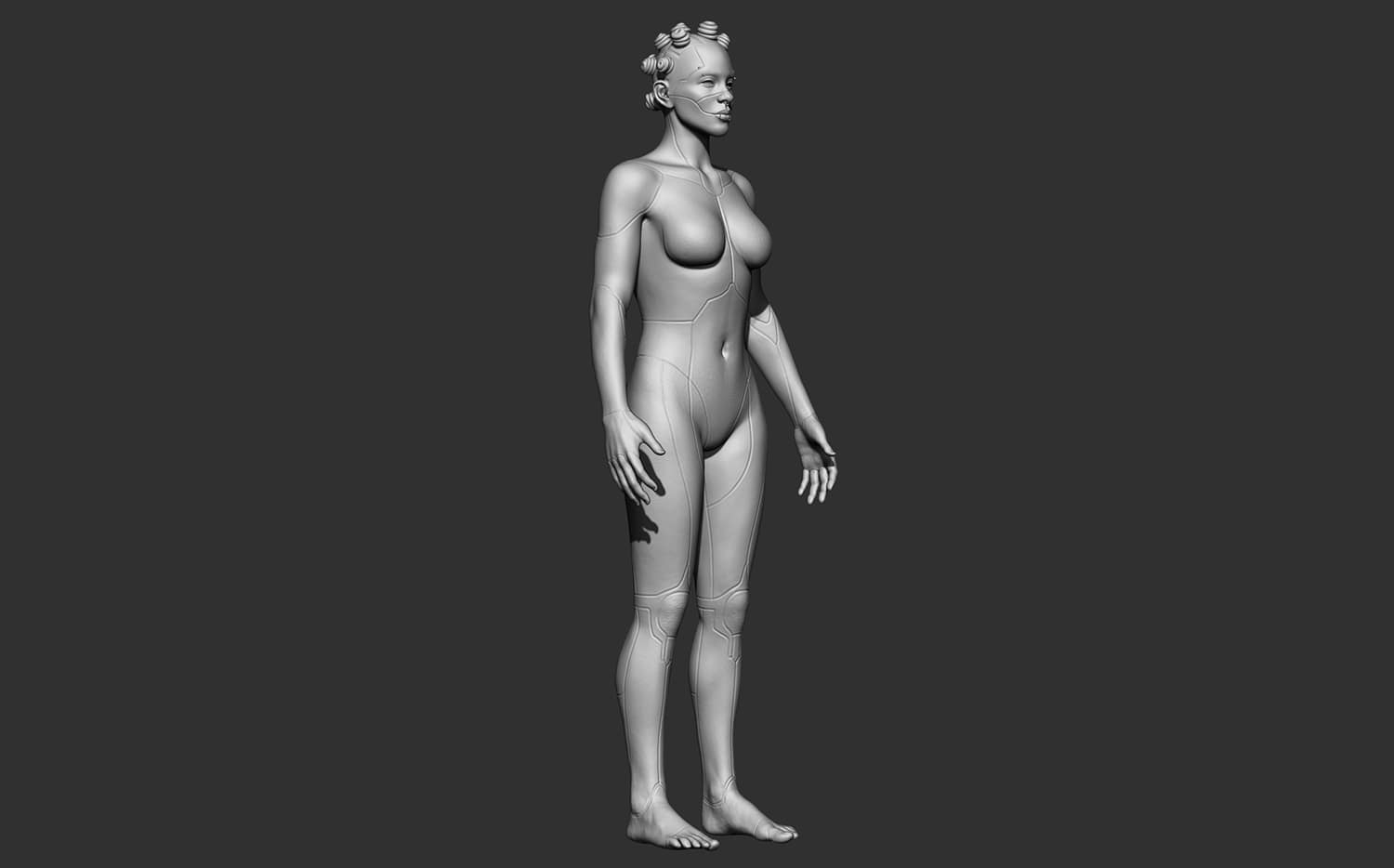
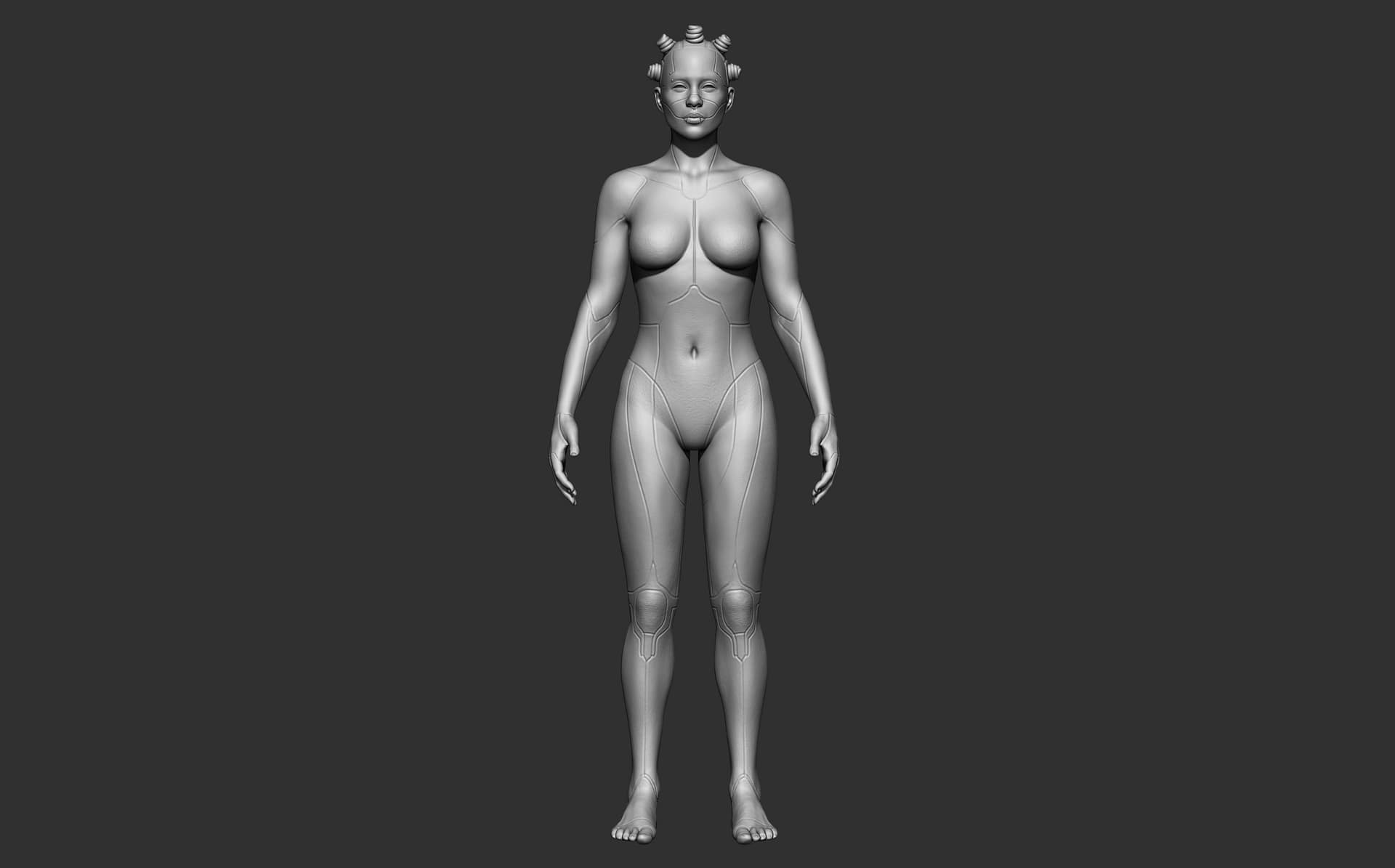
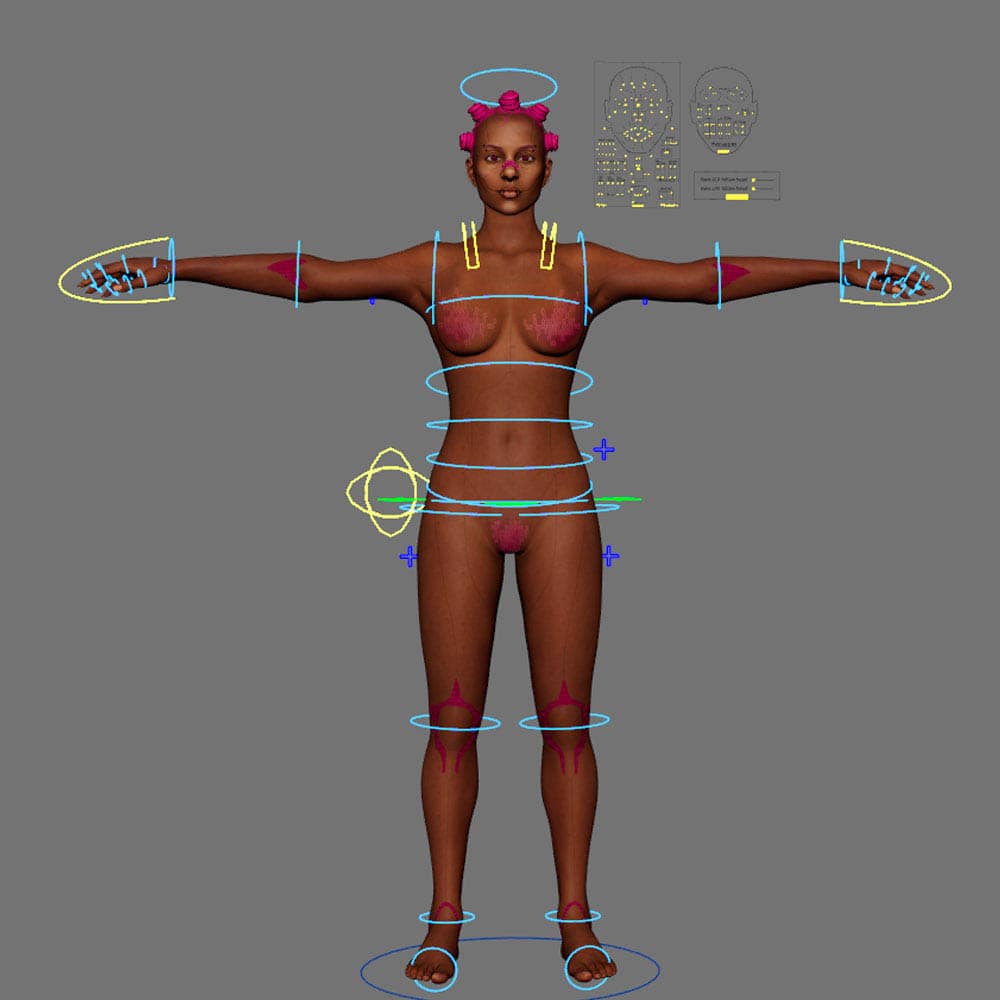
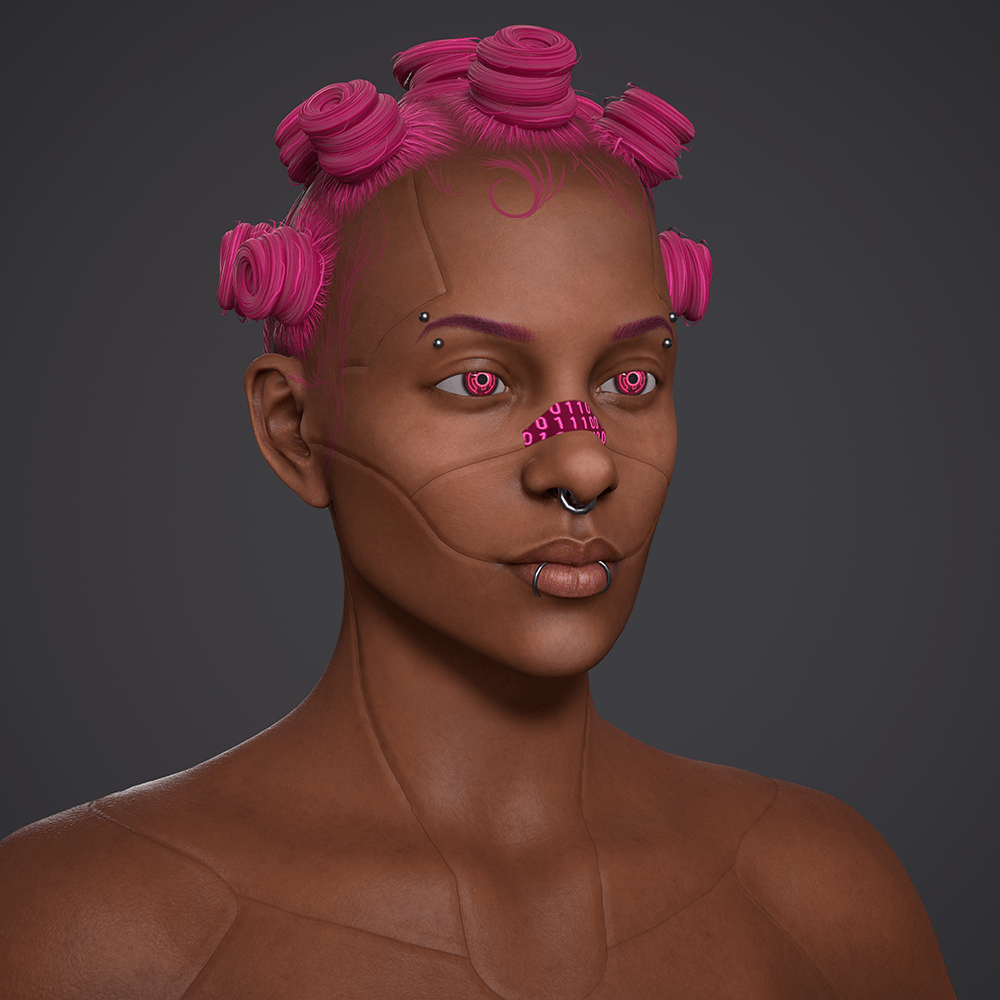
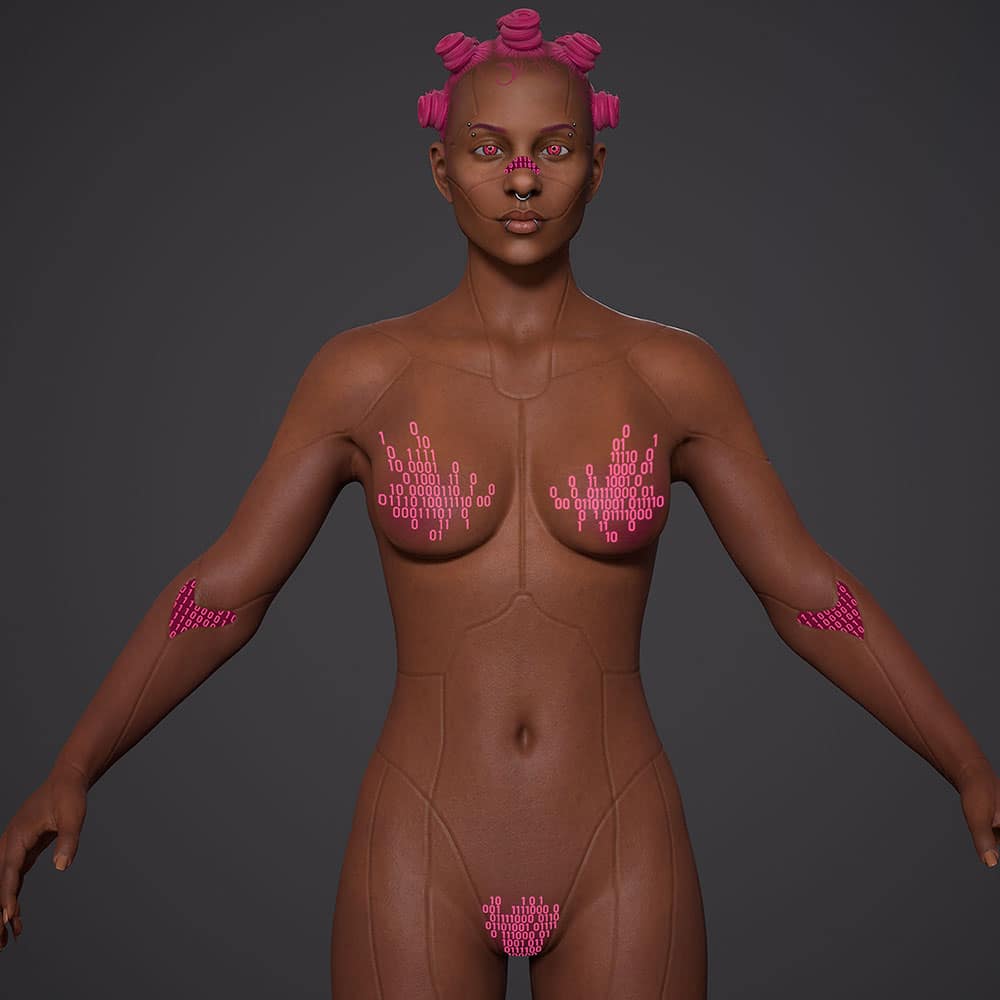
After the first round of development, I hired a new 3D artist to continue building Pixie. Using the approved character reference sheet, the character was refined to better match the original design. The final model captured Pixie’s appearance more accurately and became the version used throughout the project.
What improved:
- Closer match to the character reference sheet
- Stronger facial likeness and proportions
- Improved hair design and silhouette
- More accurate cybernetic details
- Better integration of the binary code elements
- Added facial expressions
- Fully rigged for posing and future animation
Clo3d Integration
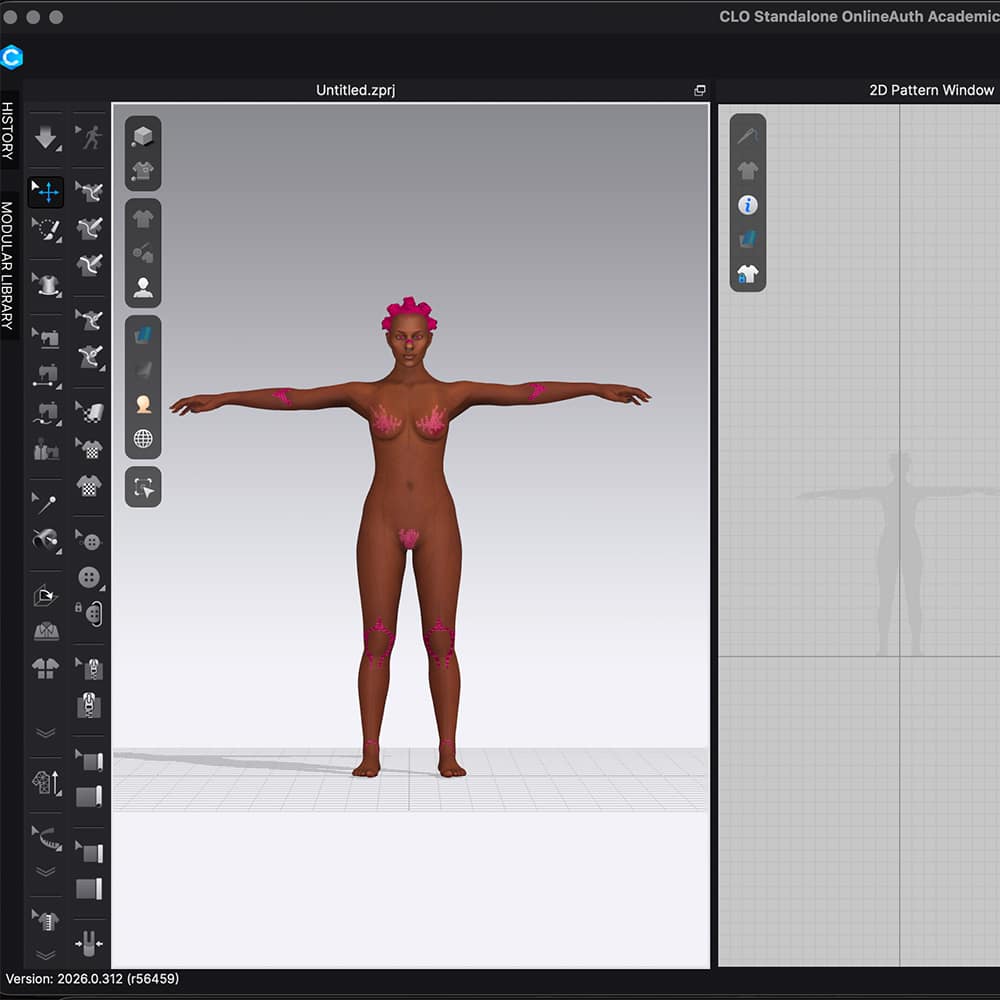
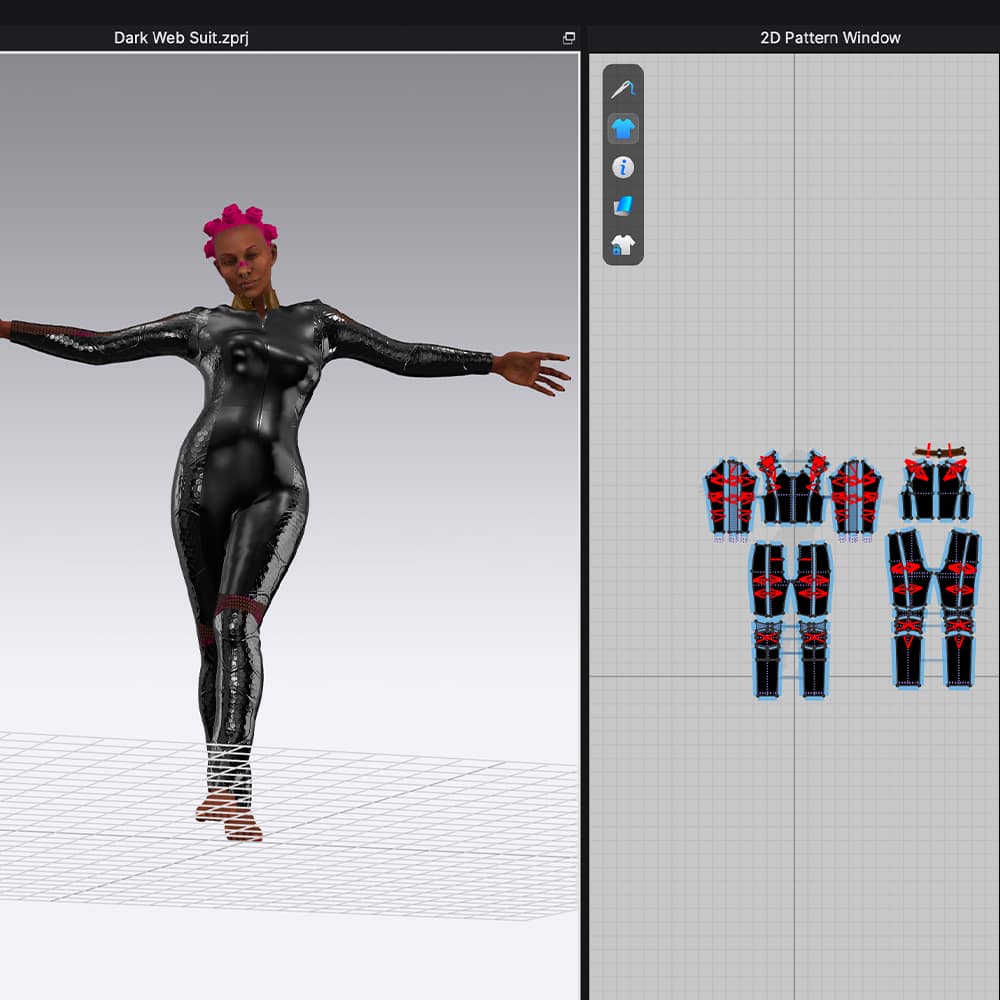
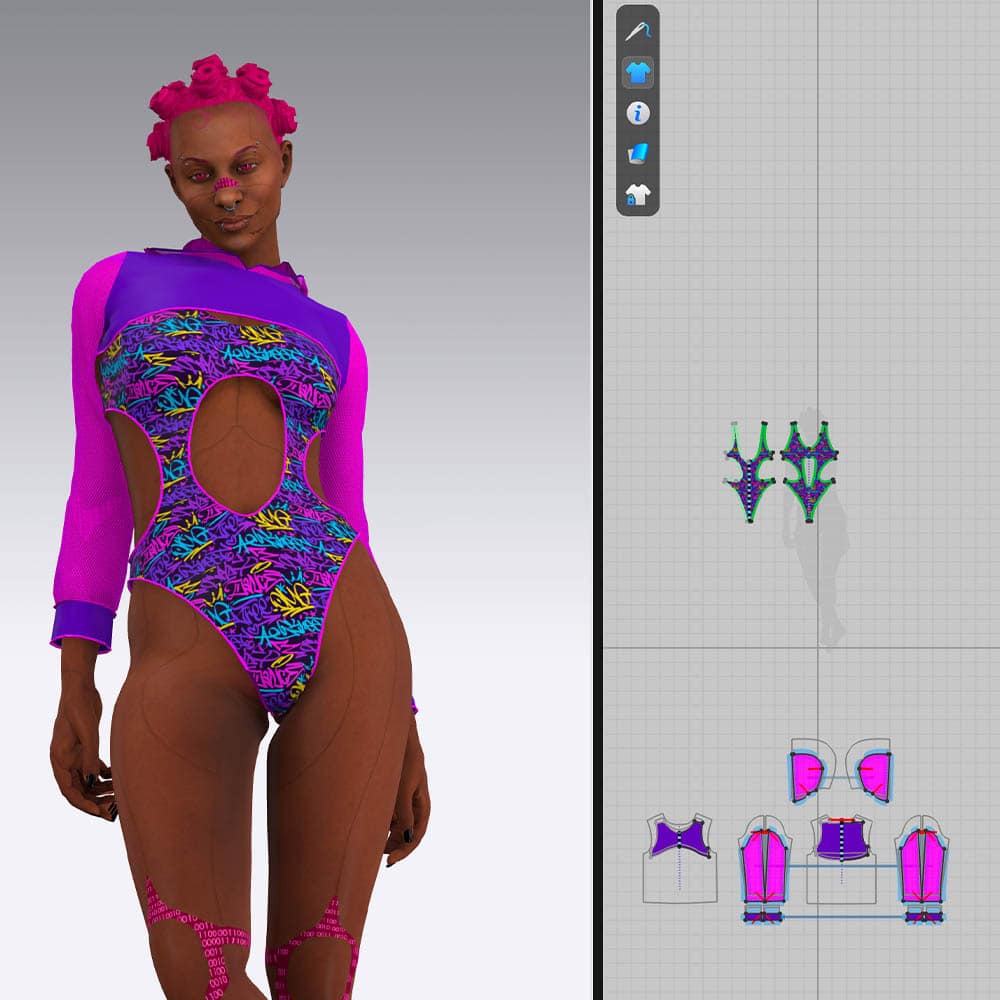
With Pixie’s 3D model complete, I imported the character into CLO3D to begin designing digital garments. One of Pixie’s primary roles is to model the clothing I create, allowing my fashion designs to exist within a consistent character and visual world. The garments developed during this stage were used throughout the zine and established a foundation for future digital fashion projects.
Final Prototype / Results
The final prototype combined the printed zine, Pixie’s digital fashion editorials, and AR experiences into a single interactive publication. The AR content was created in Adobe After Effects, where I designed animated overlays that appeared when specific pages were scanned. During testing, I found that some page layouts did not provide strong image tracking, causing the AR experience to lose alignment. In response, I redesigned several pages with stronger visual contrast and more distinct graphics, resulting in more reliable tracking and a smoother experience.

Reflection / Next Steps
This project marked an important step in my transition to becoming an independent New Media Artist. The feedback I received reinforced that an AR zine is a strong concept with room to grow. While I am proud of the outcome, the project also revealed opportunities to further develop both Pixie and the interactive experience. Moving forward, I would like to continue expanding Compiled into a larger publication and build upon the foundation established in this first issue.
Next Steps
- Bring Pixie into Unreal Engine for higher-quality renders and editorials.
- Add animated elements to Pixie’s design, such as moving binary code and reactive effects.
- Expand the AR experience with more interactive content and animations.
- Develop future issues of Compiled as an ongoing publication.
- Explore opportunities to print and sell future issues at events such as LA Zine Fest.